
.webp)
Anyone who works in medicine remembers the name of a patient lost to the consequences of a broken healthcare system.
Whether it’s a delayed cancer diagnosis due to insurance prior authorizations, a chronic illness caught too late because the patient couldn’t afford early care, or untreated mental illness worsened by stigma and lack of access, these patients weigh heavily on the shoulders of physicians. When healthcare works for patients, these outcomes are preventable. The recent gutting of government departments that are dedicated to public health and medical access will only cause further cracks in our system and will have devastating repercussions for Kentuckians for decades to come.
Across numerous health-related categories, Kentucky consistently ranks near the bottom in health outcomes. In 2020, Kentucky was ranked 47th in life expectancy, averaging 3.5 years less than the national average. In 2021, 15% of Kentuckians had three or more chronic medical conditions, compared to 10% nationally. As someone who trained outside of Kentucky and now cares for patients here, these numbers reflect a troubling reality: patients are often sicker and present much later for care.
I’ll never forget meeting a man who weighed only 75 pounds by the time I met him. He had lost over 100 pounds in the past year due to an encroaching esophageal mass and loss of the ability to swallow. He lived in the hills of eastern Kentucky with no running water, transportation, or insurance. Due to circumstance, he presented too late for curative therapy and passed away within a week of coming to the hospital.
This story, unfortunately, is not an outlier. The two leading causes of death in Kentucky are heart disease and cancer. Both of these benefit from early detection and require frequent medical visits. In 2021, 45.4% of Kentuckians relied on state and federal health insurance programs, such as Medicare and Medicaid, to get their care. We must support Medicare and Medicaid services due to the sheer fact that nearly half of our state requires this to get life-saving medical care. Having access to one of these plans may have allowed my patient to be able to afford to get medical care sooner, which could have led to early treatment of the cancer and prevention of his death.
Public health infrastructure is crucial not only for treatment but for prevention. Public health researchers assist in studying factors contributing to early disease detection and risk factor mitigation on a state level. Cuts to the CDC and HHS will impact the health of all Kentuckians. Kentucky ranks 25th in healthcare spending per person, with an average cost per person of $11,965 in healthcare expenses per year. Hospitalizations from influenza reached records this past year, while investing in flu vaccine efforts can reduce this number and cost. Cancer is the second leading cause of death in Kentucky and community-based screening programs can help improve detection at early stages. Investing in public health research and infrastructure saves lives and money by catching diseases before requiring expensive hospitalizations and end of life care. We cannot afford to neglect prevention.
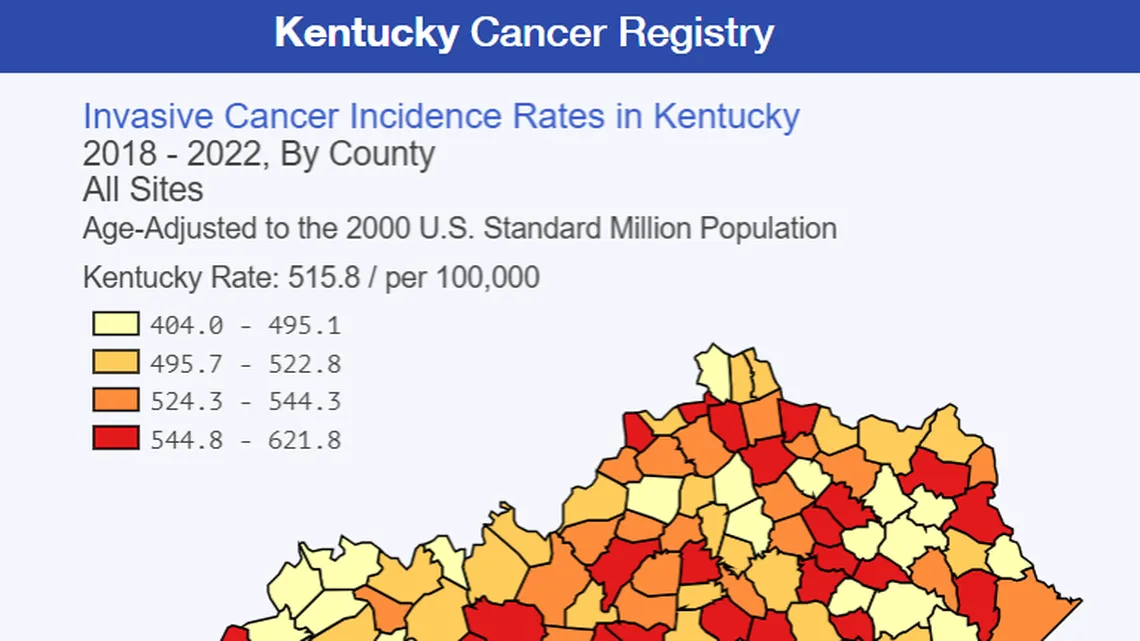
A map from the Kentucky Cancer Registry showing the rate of cancer in each Kentucky county, using data from 2018-2022. Kentucky Cancer Registry
The map above from County Health Rankings and Roadmaps clearly shows that more than half of Kentucky’s counties fall in the bottom tier for health outcomes nationwide. Our state faces mounting public health threats from chronic disease, communicable disease, and lack of access to medical care all will be worsened by the most recent government cuts.
This is not the time to pull back. It’s the time to invest in the health and future of Kentuckians. Let our senators (Rand Paul and Mitch McConnell) and Lexington congressman Andy Barr know: Kentucky deserves continued—and expanded—access to healthcare and public health support.
Dr. Alyssa Lambrecht is a resident physician training in Kentucky passionate about rural health and health equity.